Oura’s Redesigned AI App: What Actually Changed and Whether the $5.99/Month Membership Is Still Worth It
This post contains affiliate links. If you buy through a link, I may earn a commission at no extra cost to you.
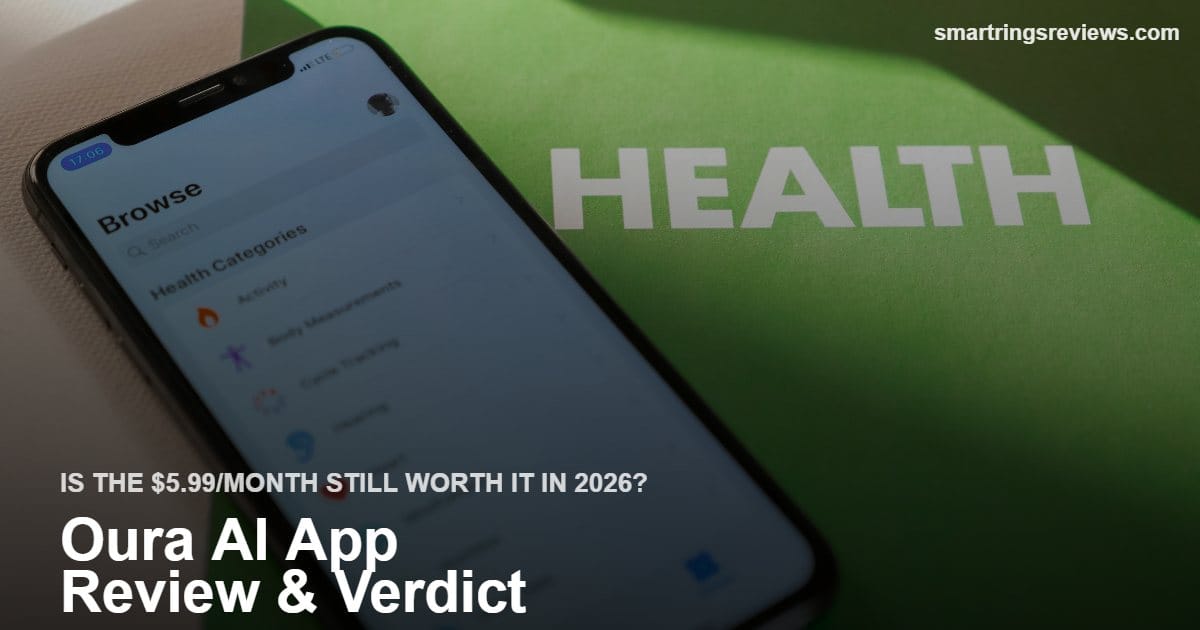
Oura quietly redesigned its app around the same time as the Ring 5 launch. New home screen, rebranded AI features, a more prominent “Advisor” experience. The question nobody’s answered cleanly: does any of it justify the $5.99/month you’re paying — or paying for the first time if you’re a new buyer?
Here’s what actually changed, what the subscription includes now versus before, and an honest verdict on whether the membership is worth it in 2026.
A quick history: how Oura got here
When Oura launched the Gen 3 ring in 2021, it introduced a subscription model that split the community: some features were paywalled behind Oura Membership, and existing Gen 2 owners were grandfathered into free access for a period. The community reaction was loud. Oura’s response was that the subscription funds ongoing software development.
Since then, they’ve added meaningful features to justify that argument — Cycle Insights, cardiovascular age, daytime stress, resilience score, and now, with the Ring 5, blood pressure signals and menopause insights. Whether that cadence is worth $5.99/month ($69.99/year) depends on which features you actually use.
What’s free vs. what requires a membership
As of mid-2026, here’s how the split looks:
| Feature | Free | Membership required |
|---|---|---|
| Sleep stages (REM, deep, light) | ✓ | |
| Basic heart rate data | ✓ | |
| Step count / activity calories | ✓ | |
| Readiness Score | ✓ | |
| Sleep Score | ✓ | |
| HRV trending | ✓ | |
| Resilience score | ✓ | |
| Daytime stress tracking | ✓ | |
| Blood pressure signals (Ring 5) | ✓ | |
| Menopause insights (Ring 5) | ✓ | |
| Oura Advisor (AI) | ✓ | |
| Cardiovascular age | ✓ | |
| Cycle Insights | ✓ |
The short version: without a membership, Oura is a sleep tracker with basic activity logging. The features most people buy the ring for — readiness, HRV, stress, and all the Ring 5’s new capabilities — live behind the paywall.
What actually changed in the redesigned app
Oura Advisor (AI)
The most prominent new element is Oura Advisor — a conversational AI layer built into the app that lets you ask questions about your health data in natural language. “Why was my readiness low this week?” “What’s affecting my sleep score?” “How has my stress been trending this month?” The Advisor reads your ring data and surfaces explanations with some degree of personalization.
It’s useful as a data interpretation layer, particularly for people who find the app’s existing charts and insights overwhelming. It’s less impressive if you’re an advanced user who already knows how to read HRV trends. The Advisor doesn’t replace your doctor and isn’t trying to — it’s more of a “what does this chart mean?” assistant than a diagnostic tool.
New home screen layout
Oura reorganized the home screen to lead with a unified daily overview — readiness, sleep, and activity in a single card view rather than three separate tabs. This is mostly a navigation quality-of-life change; the underlying data is the same. If you’ve been using Oura for years and had muscle memory built around the old navigation, the first week will be annoying. After that, the new layout is cleaner.
Ring 5-specific features
Blood pressure signals and menopause insights are Ring 5-only features — they won’t show up if you’re running a Ring 4 or Gen 3. This is a hardware limitation, not a software gate; the Ring 5’s upgraded sensor array is required to generate the underlying data. If you’re on an older ring, the app redesign doesn’t unlock anything new for you beyond the AI layer.
Is $5.99/month worth it?
Here’s the honest breakdown by use case:
Yes, if…
- You actively use readiness, HRV trending, and stress data to adjust your training, sleep habits, or lifestyle
- You have a Ring 5 and plan to use blood pressure signals or menopause insights
- You find value in the Advisor’s data explanations and would otherwise pay for a health coaching app
- You’re comparing to $10–$20/month subscriptions in the wellness app space — Oura is priced on the lower end of that tier
No, if…
- You only want sleep stage tracking and basic step counting — the free tier covers that
- The subscription cost stacks uncomfortably with other wellness subscriptions you’re already paying
- You’d rather have all your data upfront with no recurring cost (see Ultrahuman and RingConn below)
The subscription-free alternatives
Oura isn’t the only serious ring in the market, and the subscription remains the biggest differentiator in the category.
| Ring | Price | Subscription | What’s included without subscription |
|---|---|---|---|
| Oura Ring 5 | $399–$499 | $5.99/month or $69.99/year | Basic sleep, heart rate, steps |
| Ultrahuman Ring PRO | $479 | None | Everything — all insights included |
| RingConn Gen 3 | $349 | None | Everything — all insights included |
| Samsung Galaxy Ring | ~$399 | None (with Samsung Health) | All features via free Samsung Health app |
Ultrahuman Ring PRO is the most direct Oura competitor on the no-subscription front. At $479, it costs more up front than a Ring 5 ($399) — but over 12 months, the Oura Ring 5 plus membership costs $399 + $69.99 = ~$469. After that first year, Ultrahuman stays at $0 and Oura costs $69.99 annually.
Check Price — Ultrahuman Ring PRO →
Check Price — Oura Ring 5 on Amazon →
The bottom line
The redesigned app is a genuine improvement — cleaner navigation, a useful AI layer if you’re not a data power user, and Ring 5-specific features that push the health insights genuinely forward. Oura’s software has always been the best in the category, and that’s still true after the refresh.
Whether $5.99/month is worth it is a personal math question. If you actually engage with readiness scoring, HRV, and stress data regularly, the membership earns its keep. If you’re mostly curious what your sleep looked like last night, the free tier — or a subscription-free ring — probably serves you better.
Frequently Asked Questions
What does Oura Membership include in 2026?
Oura Membership ($5.99/month or $69.99/year) includes: Readiness Score, Sleep Score, HRV trending, daytime stress tracking, cardiovascular age, resilience score, Cycle Insights, Oura Advisor AI, and — for Ring 5 users — blood pressure signals and menopause insights. Basic sleep stages, heart rate, and step count are available without a subscription.
What happens to my Oura data if I cancel my membership?
If you cancel your Oura Membership, you retain access to your historical data but lose access to the membership-gated features (readiness, HRV trending, stress, etc.) going forward. Your ring will continue to collect data — you just won’t see the full interpreted view of it without an active subscription.
Is there an Oura Membership family plan?
As of mid-2026, Oura does not offer a family plan — each ring requires its own individual membership subscription at $5.99/month or $69.99/year. If multiple people in a household want full Oura access, the costs stack.
What is Oura Advisor?
Oura Advisor is a conversational AI feature inside the Oura app that lets you ask questions about your health data in natural language. It reads your ring data and provides personalized explanations — for example, explaining why your readiness score dipped or what’s contributing to your stress trend. It requires an active Oura Membership.
Can I use an Oura Ring 4 with the new app features?
Yes — the app redesign, including Oura Advisor, works with Ring 4 and Gen 3 hardware. However, Ring 5-specific features like blood pressure signals and menopause insights require Ring 5 hardware and are not available on older rings.