Inside the Oura Ring 5: Smaller Design, Blood Pressure Signals, and What the $399 Gets You
This post contains affiliate links. If you buy through a link, I may earn a commission at no extra cost to you.
Medical disclaimer: This article is for general information only and is not medical advice. Readers should consult a qualified healthcare provider for diagnosis or treatment.
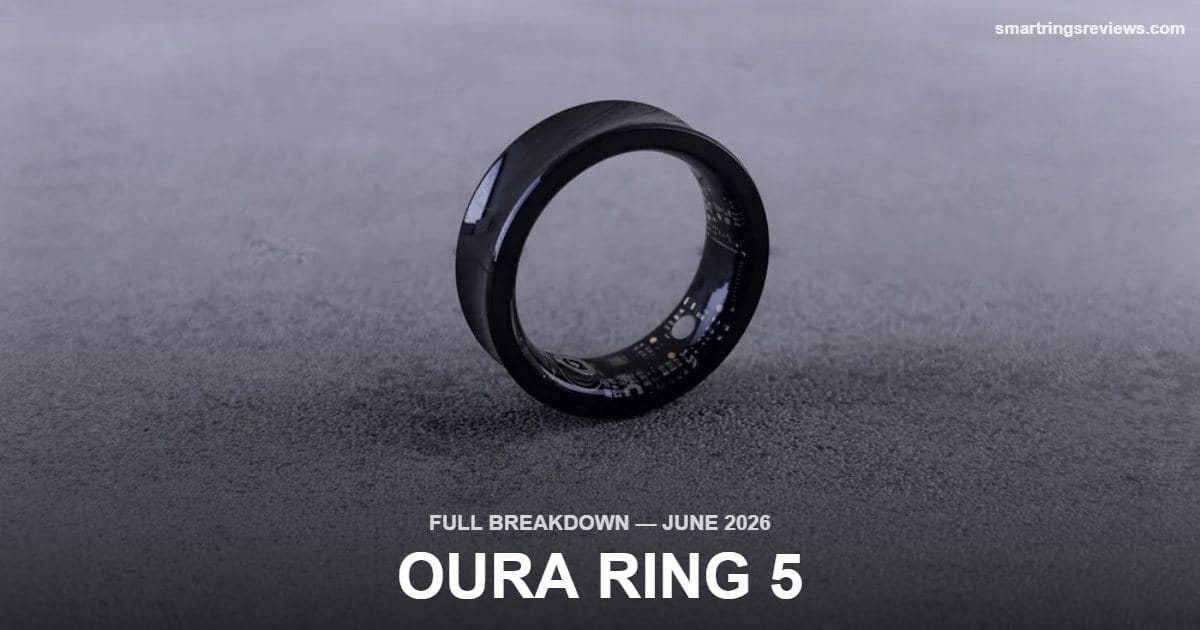
Oura just shipped the Ring 5 — and the most interesting thing about it isn’t the blood pressure sensor. It’s how small they made it.
The Ring 5 is 40% smaller than the Ring 4. Not in a way you’d notice in a press photo — in a way that changes how it feels on your finger, how it reads in a work meeting, and who it actually fits. At 6.09mm wide and 2.29mm thick, this is closer to a piece of jewelry than any smart ring Oura has shipped before. They rebuilt the mechanical, electrical, optical, and battery architecture from scratch to get there.
Whether that’s worth $399 — or $499 for the premium finishes — depends on what you’re upgrading from and what you actually use the platform for. Here’s the honest breakdown.
What’s in the Oura Ring 5
Specs at a glance
| Oura Ring 5 | Oura Ring 4 | |
|---|---|---|
| Width | 6.09mm | 7.99mm |
| Thickness | 2.29mm | 2.88mm |
| Battery life | ~7 days | ~8 days |
| Water resistance | 100m | 100m |
| Signal pathways | 12 | Not disclosed |
| Blood Pressure Signals | Yes | No |
| GLP-1 tracking | Yes | No |
| Live workout tracking | Yes (via paired phone) | No |
| Starting price | $399 | $349 |
| Membership | $5.99/mo or $69.99/yr | $5.99/mo or $69.99/yr |
The sensor architecture is new
Oura redesigned the optical system with twelve signal pathways — up from previous generations — and precision-engineered sensor domes that improve skin contact. The stated goal is better accuracy across more finger types and skin tones. That matters because smart ring optical accuracy has historically varied by ring fit and skin pigmentation, and Oura is explicitly targeting that gap with this hardware revision.
Blood Pressure Signals: what it actually does
This is the feature getting the most headlines, and it’s easy to misread what it is. Blood Pressure Signals is not a blood pressure cuff. It does not give you systolic and diastolic numbers.
What it does: it monitors biometric patterns — primarily overnight — to detect shifts that may suggest cardiovascular strain. Oura’s focus is on what they call “Nighttime Blood Pressure”: during sleep, a healthy cardiovascular system naturally lets blood pressure dip. When that dip doesn’t happen, it can be an early warning signal. The Ring 5 tracks that pattern over time and flags changes — not as a diagnosis, but as a signal worth discussing with a doctor if it’s consistent.
Think of it as a trend-detection layer, not a measurement tool. If it surfaces a pattern change, that’s a prompt to follow up with your healthcare provider — nothing more. For people managing cardiovascular health or blood pressure medications, this kind of longitudinal trend data could be genuinely useful context. For everyone else, it’s more of a background health indicator.
Worth noting: RingConn launched a similar vascular health trend feature in its Gen 3 on May 29, 2026 — days before the Ring 5 shipped. This is clearly the direction the entire smart ring category is heading in 2026.
GLP-1 tracking
Oura added a dedicated toolset for people on GLP-1 medications like semaglutide (Ozempic, Wegovy) or tirzepatide (Mounjaro). The feature tracks how GLP-1 treatment affects your biometrics over time — sleep quality, HRV, resting heart rate, temperature variance — so you and your care team can see trends across your medication journey.
This is meaningfully different from the general GLP-1 content Oura has produced before. It’s a structured in-app feature tied to the Ring 5’s improved sensor accuracy. If you’re on a GLP-1 and considering a smart ring, this is currently a Ring 5 exclusive and a legitimate differentiator.
Live workout tracking
The Ring 5 adds real-time data during exercise — pace, distance, and heart rate — displayed via a connected phone. This has been one of the most consistent complaints about Oura for years: you saw your data after the workout, not during. Live tracking via a paired device closes that gap, at least for the runs and rides where you have your phone on you.
Women’s health updates (also on Ring 3 and 4)
Launched alongside the Ring 5 but available to existing Oura users via app update: Menopause Insights (rolled out globally May 6, 2026), Hormonal Birth Control support for cycle tracking accuracy, and a Brain Health Study through Oura Labs. These are software-side additions — not Ring 5 hardware exclusives — but they’re meaningful expansions to the platform.
Battery and design
Despite being 40% smaller, the Ring 5 maintains approximately seven days of battery life per charge — slightly less than the Ring 4’s eight days, but impressive given the size reduction. The charging hardware is the same dedicated charger; no charging case like RingConn offers.
Available at launch: Silver ($399), Black ($399), Gold ($499), Stealth ($499), Brushed Silver ($499), Deep Rose ($499).
The bottom line
The Oura Ring 5 is the best Oura ring they’ve ever made — smaller, more accurate on the sensor side, and meaningfully more capable on cardiovascular and medication tracking. Whether it’s worth upgrading for depends almost entirely on how much you use the platform. If Oura is a genuine daily health tool for you and blood pressure trend monitoring or GLP-1 tracking matter, this is the ring to get. If you’re new to smart rings and want the current-generation Oura hardware, buy the Ring 5 and skip the Ring 4 entirely. If you’re already on a Ring 4 and mostly using it for sleep scores and HRV — wait. The Ring 4 still gives you accurate, useful data. Let the BP monitoring feature mature for a few months before spending $399 on an upgrade.
Frequently Asked Questions
Does the Oura Ring 5 measure blood pressure directly?
No. Blood Pressure Signals tracks biometric patterns that may indicate cardiovascular strain — particularly overnight — but it does not provide systolic and diastolic readings. It’s a trend-detection layer, not a clinical measurement device. If it flags consistent changes, discuss them with your healthcare provider.
Do I need a subscription for the Oura Ring 5?
Yes. An Oura Membership is required for full access to insights including Blood Pressure Signals, GLP-1 tracking, and sleep data. Membership costs $5.99/month or $69.99/year. Without it, functionality is significantly limited — the ring becomes a basic step counter.
Is the Oura Ring 5 worth upgrading from Ring 4?
For most Ring 4 users, it’s not urgent. The Ring 5 is smaller and adds blood pressure trend monitoring, GLP-1 tracking, and live workout data — but the Ring 4 still delivers accurate sleep, recovery, and HRV data. If those new features are priorities for your specific health situation, the upgrade makes sense.
When did the Oura Ring 5 ship?
Global shipping began June 4, 2026. Pre-orders placed before that date are being fulfilled in order received.
What sizes does the Oura Ring 5 come in?
Sizes 4 through 15, the same range as the Ring 4. Order a sizing kit before buying — smart ring sizing isn’t the same as your standard ring size and varies by finger and time of day. Oura ships sizing kits free.