
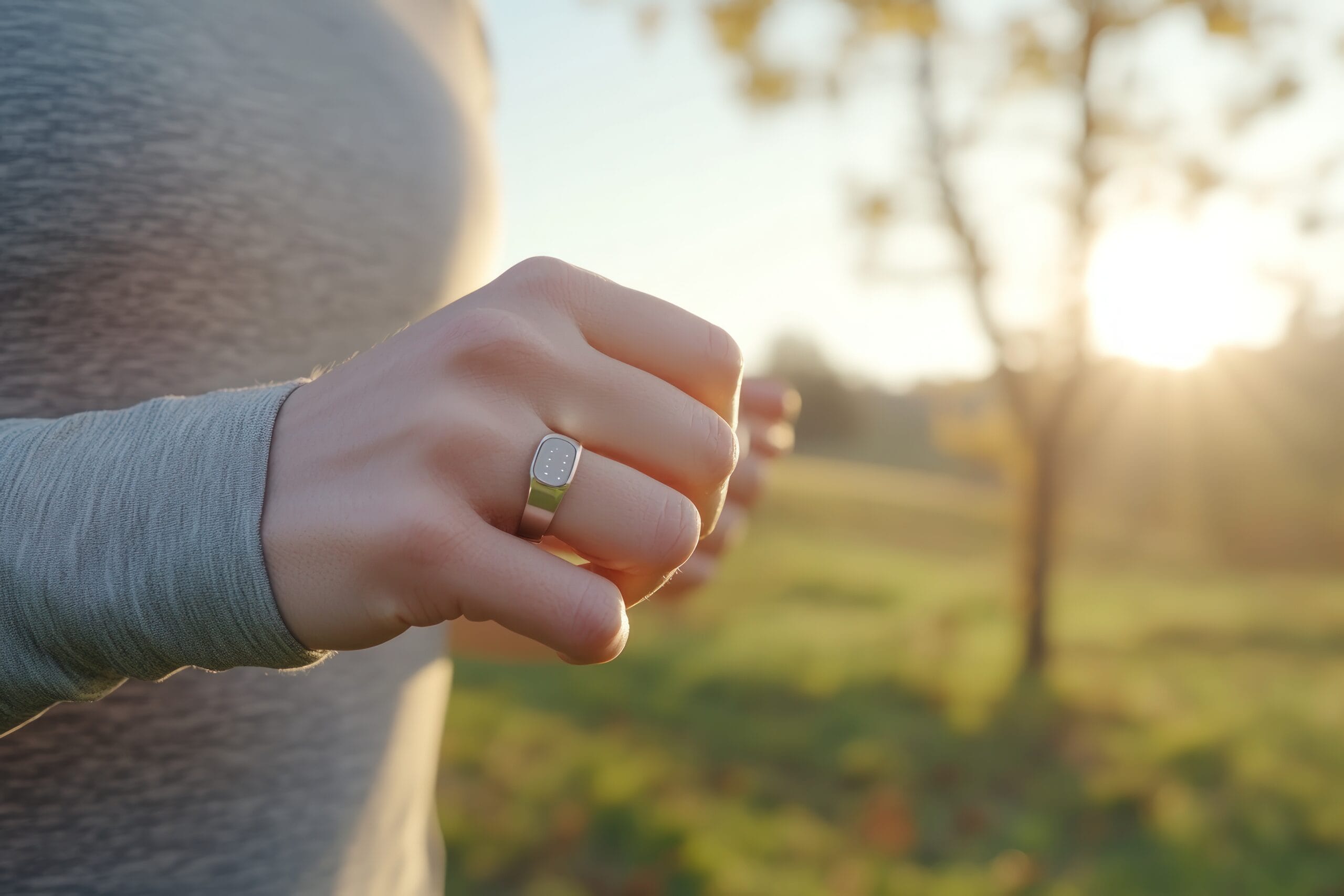
Best Smart Rings for Women in 2026: Cycle Tracking, Fit & Features Compared
This post contains affiliate links. If you buy through a link, I may earn a commission at no extra cost to you.Last updated: April 21, 2026 Estimated reading time: 12 minutesSmart rings turn out to be an unusually good fit for women’s health tracking — and not just because they’re smaller and lighter than a typical watch. The biometrics that matter most for female health (resting heart rate, HRV, sleep quality, and especially skin temperature) are exactly where a finger-worn PPG sensor excels. Continuous overnight temperature tracking is meaningfully more accurate than the spot readings you’d take with a thermometer each morning. You get a cleaner, longer signal while you sleep, every night, without having to remember anything.That said, not all smart rings are equally useful for women. Some market cycle tracking without delivering the data quality to back it up. Some don’t size small enough. Some lock the most useful health metrics behind a subscription. This guide cuts through that.If cycle tracking is your primary reason to buy a ring, start with Oura. If you want cycle tracking without a monthly fee, start with Ultrahuman Ring PRO. If budget is the first filter, look at RingConn Gen 2. The details below will tell you why — and when those recommendations change.The quick picksFor most people: Oura Ring Gen 3 or Gen 4. The cycle tracking integration with Natural Cycles is best-in-class, the app is the most polished in the category, and the health research backing their female-specific metrics is the deepest of any ring manufacturer. The $5.99/month subscription is a real cost, but it funds the feature depth that makes it worth using.If you don’t want a subscription: Ultrahuman Ring PRO. Solid cycle tracking (period log, temperature deviation, fertile window estimates), no ongoing fees, and an app that has matured quickly. You give up a little depth compared to Oura, but not as much as the price difference implies.If battery life matters most: RingConn Gen 2. Ten-plus days on a charge, cycle tracking included, no subscription. The app is less refined but functional.If you own a recent Samsung phone: Galaxy Ring. The lightest ring available, and Samsung Health has added menstrual cycle irregularity detection. Only worth it if you’re already in the Samsung ecosystem.
What matters most for women
1. Skin temperature and cycle tracking
The most valuable female health feature a smart ring can offer is continuous skin temperature tracking paired with a cycle tracking framework. Your basal body temperature rises slightly (typically 0.2–0.5°C) after ovulation, and stays elevated through the luteal phase. Detecting that shift reliably requires measurements in a consistent state — ideally during deep sleep, when your body is at rest and temperature stabilizes. A ring worn every night takes dozens of readings during your sleep window and averages them, which is far more reliable than a single oral temperature taken each morning.Oura has the most clinically validated approach here. Their integration with Natural Cycles — an FDA-cleared contraceptive app — uses Oura’s temperature data to detect the ovulatory temperature shift and estimate fertile windows. It’s the most data-rigorous cycle tracking available in the consumer wearable space.Ultrahuman, RingConn, and Samsung also track skin temperature and offer cycle logging. The temperature tracking quality is good across all three. The difference is in how the data is interpreted and presented in the app — Oura + Natural Cycles offers the deepest analysis by a meaningful margin.2. Ring sizing for smaller fingers
Most smart rings are designed with average hand sizes in mind. This matters because a ring that’s too large rotates on your finger, loses skin contact with the PPG sensor, and produces noisy data. Size availability by brand:- Oura: US sizes 6–13. US size 6 / 48mm inner diameter is the smallest.
- Ultrahuman Ring PRO: Sizes 5–14 (inner diameter 46.3–64mm). Starts slightly smaller than Oura — a real advantage for women with slender fingers.
- RingConn Gen 2: Sizes 6–21. Wide range, free sizing kit available.
- Samsung Galaxy Ring: US sizes 5–15. The lightest ring (2.3–3.0g depending on size) and slim profile make it the most comfortable option for small hands.
- Evie Ring: Sizes 6–12. Designed around women’s finger proportions specifically.
3. App depth for female health
Tracking the data is only useful if the app helps you understand what it means. Questions to ask when evaluating a ring’s app: Does it explain what temperature deviation means, in plain language? Can you log cycle data (period start, symptoms, spotting) inside the app, or do you need a separate integration? Does it connect to Natural Cycles, Clue, or Apple Health? Does it surface cycle phase in context — explaining, for example, why your HRV is typically lower in the luteal phase?Oura is the clear leader here. Their app explicitly labels cycle phases, connects temperature deviation to reproductive context, and integrates directly with Natural Cycles. Ultrahuman has been improving their cycle features significantly and now covers the basics well. RingConn and Samsung cover period logging and temperature trends but don’t go as deep into cycle-phase context.Best cycle tracking: Oura Ring Gen 3 / Gen 4
Price: $299–$549 depending on finish, plus $5.99/month or $69.99/year Battery: 4–6 days real-world Sizes: US 6–13 Best for: Women who want the deepest cycle tracking and most polished health appIf cycle tracking is your primary reason to buy a smart ring, Oura is the answer. The reasons are specific.Natural Cycles integration. Natural Cycles is an FDA-cleared contraceptive app that uses temperature data to identify the fertile window. It was originally designed around oral basal body temperature (BBT) measurements. Oura’s integration feeds continuous skin temperature data into Natural Cycles in place of manual morning readings — and because the overnight data is more consistent than oral spot readings, the fertile window calculation is more reliable. This is the most scientifically grounded cycle tracking available in a consumer wearable.Cycle insights in the Oura app. Even without Natural Cycles, Oura’s app shows temperature deviation from your baseline, labels cycle phases, and contextualizes your other metrics against where you are in your cycle. If your recovery score looks low for no obvious reason, Oura will flag whether you’re in the late luteal phase — where progesterone elevation naturally suppresses HRV and disrupts sleep. That kind of context is genuinely useful.Established research base. Oura has published more peer-reviewed validation work on their temperature and sleep metrics than any other ring maker. That doesn’t mean their data is perfect, but it means their algorithms are better-tested against ground truth.What to watch for: the subscription. Over three years, you’re paying approximately $509 total (hardware + subscription) versus $349 for Ultrahuman. If you actively use the cycle features and the Natural Cycles integration, that gap is defensible. If you mostly want basic health tracking, it’s harder to justify.Also note: Oura’s smallest size is US 6. If your ring finger is smaller than that, look at Ultrahuman (starts at US size 5) or the Samsung Galaxy Ring.Best subscription-free: Ultrahuman Ring PRO
Price: $349 (no subscription) Battery: 4–6 days real-world Sizes: US 5–14 Best for: Women who want solid cycle tracking without a monthly feeUltrahuman has invested significantly in their cycle tracking features over the past year. The ring tracks skin temperature every night, computes deviation from your personal baseline, and logs it against a period tracking calendar inside the app. You get fertile window estimates, luteal phase detection, and cycle phase context layered onto your other health metrics — all included in the hardware price.Where it falls short of Oura: there’s no Natural Cycles integration, and the cycle feature depth isn’t quite as rich. Ultrahuman can tell you where you are in your cycle and flag how your metrics tend to change across phases. Oura does that and connects to a clinically validated birth control framework. If you’re relying on temperature tracking for contraception, Oura + Natural Cycles is the more studied option.Where Ultrahuman wins: the starting size is US 5 (vs. Oura’s US 6), which is a real advantage for women with smaller ring fingers. And over a three-year window, the $0 subscription saves approximately $210 versus Oura. The app’s Cycle section has a clear monthly calendar view, phase labels, and temperature deviation graphs. It’s functional and cleanly designed.Verdict: if price matters and you don’t need the Natural Cycles integration specifically, the Ultrahuman Ring PRO is the better financial decision and a genuinely strong ring.Best battery life: RingConn Gen 2
Price: $279 (no subscription) Battery: 10–12 days real-world Sizes: 6–21 Best for: Women who want set-it-and-forget-it tracking with no ongoing feesIf the main thing you want from a smart ring is reliable health data with minimal maintenance, RingConn is hard to beat. The Gen 2 lasts 10–12 days on a charge in real-world use, which means you’re charging about twice a month instead of every few days. That might seem minor until the night your ring dies at 2am because you forgot.For cycle tracking: RingConn includes skin temperature tracking, period logging, and cycle phase estimation. The temperature data is tracked nightly and displayed as a deviation chart in the app. The cycle features are functional, though less contextual than Oura or Ultrahuman — you get the data, but the app doesn’t do as much to explain what it means in the context of your other health metrics.The main limitation is the app. It works, but feels less polished than Oura or Ultrahuman — navigation is occasionally awkward, data export is limited, and there’s no third-party cycle app connection at the time of writing. If you already use Clue or Natural Cycles, RingConn’s data stays siloed. For women who want a ring that tracks reliably, charges infrequently, and doesn’t require a subscription, it’s a strong choice.Lightest option: Samsung Galaxy Ring
Price: $399 (no subscription) Battery: 5–6 days real-world Sizes: US 5–15 Best for: Samsung phone users who prioritize comfort and lightweight wearThe Galaxy Ring is the lightest ring in this guide at 2.3–3.0g depending on size — meaningfully lighter than Oura (4–6g) or RingConn (3–3.8g). For women who find any ring feel distracting during sleep or daily wear, that difference is noticeable.Samsung added menstrual cycle irregularity detection in a late 2025 update — it uses skin temperature deviation and HRV patterns to flag irregular cycles. This is a useful alert-based feature (“your cycle may be irregular this month”) rather than a deep analysis tool. It’s a good starting point for cycle awareness, not the depth of Oura’s approach.The critical limitation: Galaxy Ring’s full feature set requires a recent Samsung Galaxy phone. On iPhone, you lose the irregular cycle detection, the health report features, and the gesture controls. On non-Samsung Android, the same applies. If you’re on iPhone, Ultrahuman or Oura will serve you better.Worth knowing about: Evie Ring by Movano Health
Price: ~$269 (check current availability) Battery: 4–5 days real-world Sizes: US 6–12The Evie Ring is the only ring in this guide designed specifically for women from the ground up. Movano Health built it around female hand proportions — the sensor placement accounts for the narrower average ring width in women’s sizes, which is a real design consideration that generic rings don’t address.The Evie tracks heart rate, HRV, SpO2, skin temperature, sleep, steps, and menstrual cycle. The app has a female health-first layout that puts cycle tracking front and center. Where it falls short: the app is thinner than Oura or Ultrahuman, data export is limited, and the company is smaller with less of a track record. I’d call it a watch-this-space product — interesting, thoughtfully designed, but not yet at the maturity level of the top three picks for most buyers. If you’ve tried the main rings and felt neither was quite right physically, the Evie is worth a look.Most affordable: BKWAT VFR
The BKWAT VFR is marketed specifically toward women — frosted finish, smaller size options — and lands at $45–$88 depending on configuration. That puts it well below every other ring on this list. No subscription, IP68 water and dust resistance, sleep and SpO2 tracking, and 100+ sports modes.
I’d be honest about what it is: BKWAT is a Shopify-style brand running on Chinese OEM hardware, and its cycle tracking should not be confused with what Oura, Natural Cycles, or the Evie Ring are doing on the regulatory side. There’s no FDA clearance, no peer-reviewed validation, no medical-grade sensor pedigree. Treat the data as directional.
What it is good for: a first smart ring at a price that doesn’t require a real commitment. If you’re not sure you’ll wear one consistently, or you want to test the form factor before spending $300+, the VFR is a sensible entry point.
Buy BKWAT VFR: Amazon | Official Site


One Comment