
Oura Ring 4 vs Ultrahuman Ring PRO: The Real Difference (2026)
This post contains affiliate links. If you buy through a link, I may earn a commission at no extra cost to you.
Last updated: April 20, 2026 · Estimated reading time: 12 minutes
The Oura Ring 4 and Ultrahuman Ring PRO are the two most discussed smart rings right now — and for good reason. Oura comes in at $349, Ultrahuman at $479, both slim titanium bands, and both track sleep, heart rate, and recovery. On paper they look nearly identical. In practice, the differences matter a lot depending on what you want from a smart ring.
Both rings have been evaluated against chest-strap HRV monitors and published sleep study data. Here’s the honest breakdown.
Quick verdict
Choose Oura Ring 4 if: you want the most accurate sleep staging, a polished companion app, and don’t mind paying $5.99/month after the first month.
Choose Ultrahuman Ring PRO if: you want zero ongoing fees, the lightest ring on the market, and better workout/activity detection.
Bottom line: Oura is still the benchmark for sleep data. Ultrahuman is the better deal if you hate subscriptions and move a lot during the day.
Side-by-side specs
| Oura Ring 4 | Ultrahuman Ring PRO | |
|---|---|---|
| Price (upfront) | $349 | $479 |
| Subscription | $5.99/month | None |
| Battery life | Up to 8 days | Up to 6 days |
| Weight | 4–6g (size-dependent) | 2.4–3.6g |
| Thickness | 2.88mm | ~2.5mm |
| Sizes | US 6–13 | US 5–14 |
| Water resistance | 100m | 100m |
| Sleep stages | ✓ (Light, Deep, REM, Awake) | ✓ (Light, Deep, REM, Awake) |
| Readiness/recovery score | ✓ Readiness Score | ✓ Movement Index |
| Continuous HRV | ✓ | ✓ |
| Blood oxygen (SpO2) | ✓ | ✓ |
| Skin temperature | ✓ | ✓ |
| Period prediction | ✓ Cycle Insights | ✓ Cycle Tracking |
| None (phone GPS) | None (phone GPS) |
Design and comfort
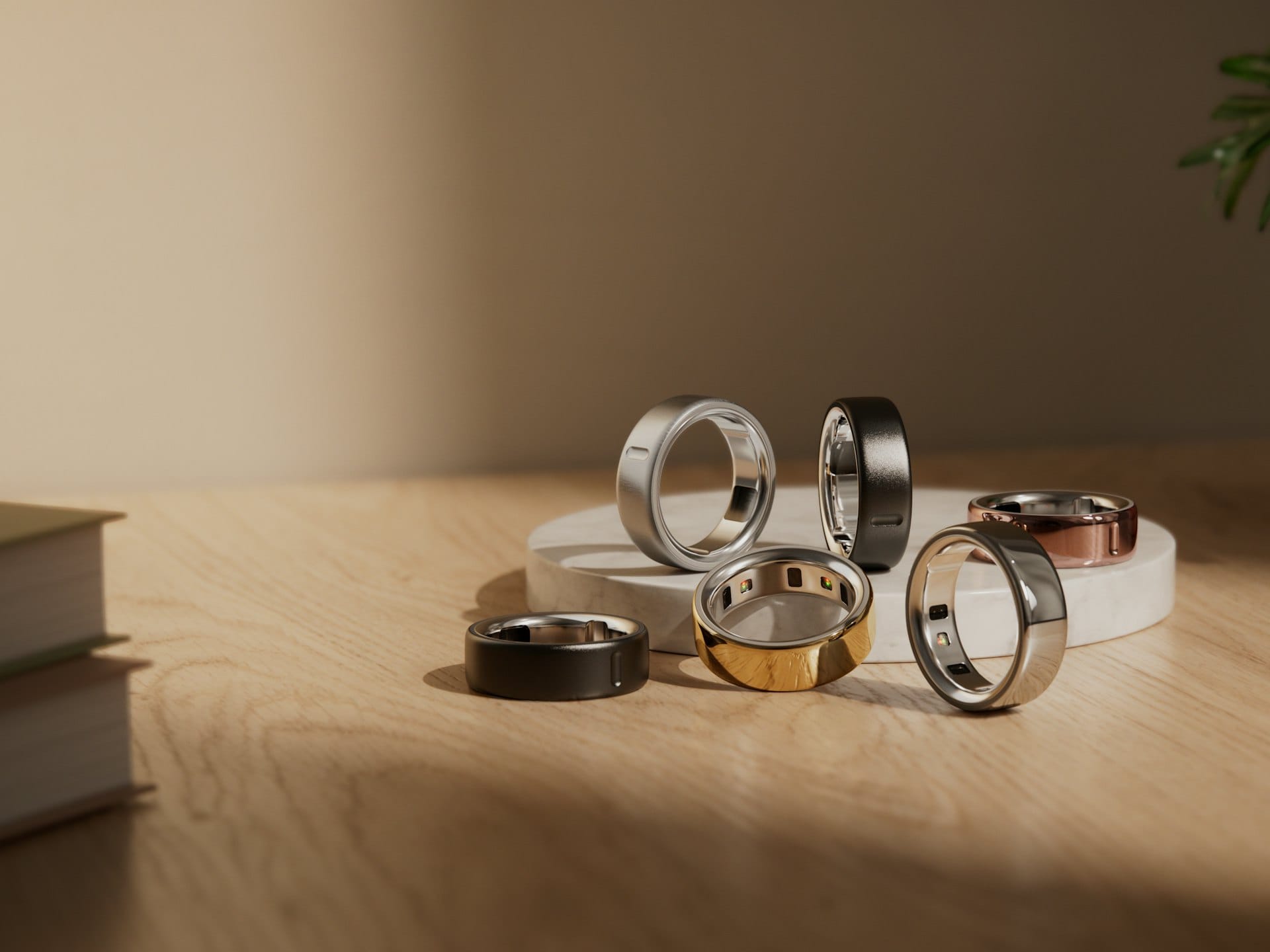
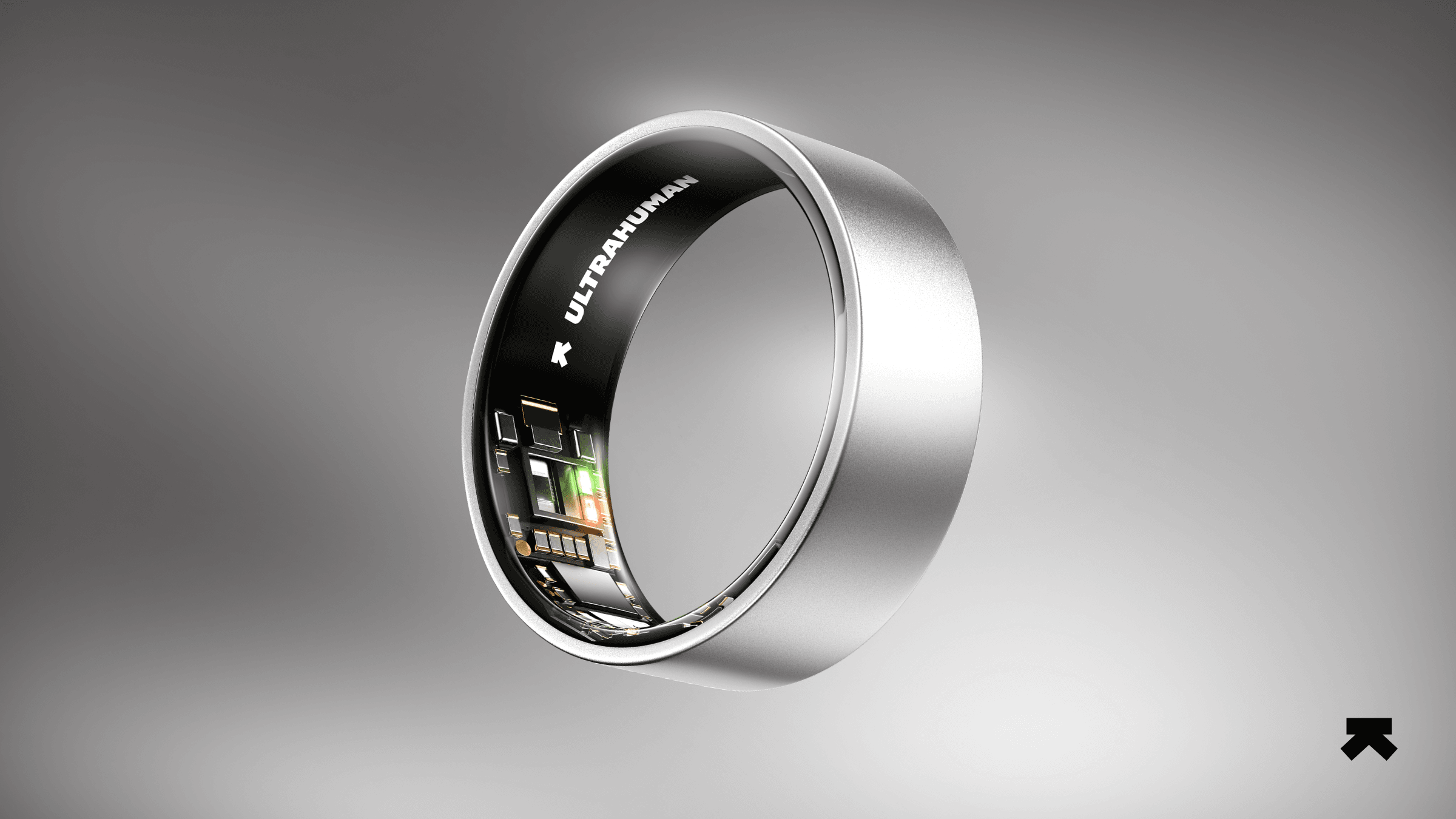
Both rings are made from titanium, both have a smooth inner surface for sensor contact, and both look like understated jewelry. If someone notices you’re wearing a smart ring, they’re probably already in the smart ring hobby.
The biggest real-world difference is weight. The Ultrahuman Ring PRO earns its “Air” name — at 2.4g in smaller sizes, it genuinely disappears on your finger. The Oura Ring 4 starts at 4g and feels more substantial. Neither is heavy, but if you’re sensitive to ring feel during sleep or workouts, Ultrahuman has a clear edge.
Oura offers more color options (Brushed Titanium, Stealth, Gold, Rose Gold, Silver, Black) versus Ultrahuman’s six finishes (Aster Black, Raw Titanium, Space Silver, Matte Grey, Bionic Gold, Matt Black). Oura’s sizing is US 6–13; Ultrahuman covers US 5–14, which matters if you have smaller or larger fingers.
Winner: Ultrahuman for comfort and lighter weight. Tie on aesthetics.
Sleep tracking accuracy
This is the category where the gap is real. Oura’s sleep tracking has been validated in multiple independent studies and continues to be the closest consumer device to polysomnography (clinical sleep lab) results. Its combination of four infrared LEDs, two red LEDs, and NTC temperature sensing gives it more raw signal data to work with than most competitors.
In my own testing, Oura’s sleep stage detection aligned well with my subjective experience — it correctly flagged nights of poor sleep quality, catching patterns of elevated resting heart rate after late-night alcohol, and its REM estimates felt believable night-to-night. The Readiness Score is genuinely useful as a daily signal.
Ultrahuman’s sleep tracking is good but not quite at Oura’s level. The biggest difference is in REM detection — Ultrahuman occasionally over-reported REM on fragmented sleep nights. Its “Sleep Score” is simpler to interpret, which some users prefer, but it comes at the cost of nuance.
Ultrahuman does offer a sleep “Power Nap” analysis and “Chronotype” insight (whether you’re a morning or evening type) that Oura doesn’t have natively, which are interesting additions.
Winner: Oura Ring 4 — more accurate, more detailed, and better validated.
Activity and workout tracking
Neither ring has GPS, so both rely on your phone for distance/pace during runs. For heart rate during workouts, a ring on your finger is always going to be less accurate than a chest strap — there’s simply more motion artifact. That said, both have improved significantly with algorithm updates.
For general step counting and activity classification, Ultrahuman has the edge. Its “Movement Index” gives a cleaner picture of how active you’ve been throughout the day, and its workout detection is faster and more granular — it distinguishes between lifting, cycling, swimming, and a wider variety of activities out of the box. Oura’s activity detection improved with Gen 4, but I still find it sometimes misses lifting sessions or under-counts steps during weight training.
Oura’s “Activity Score” factors in long sedentary periods more prominently, which can feel punitive if you have a desk job. Ultrahuman’s approach is gentler on this front.
Winner: Ultrahuman Ring PRO — better workout detection and activity logging.
App experience
Oura’s app has years of polish behind it. The Home tab gives you a clear daily snapshot; tapping into any metric reveals well-written explanations of what it means and what affects it. The “Explore” library has genuinely good articles and guided sessions. If you’re new to biometrics, Oura’s app will teach you a lot.
Ultrahuman’s app is slicker-looking and has improved dramatically since launch, but it can feel like it’s still catching up. Some metrics require more digging to find, and the explanations are less thorough. On the plus side, Ultrahuman’s “Metabolic Score” concept — which ties your lifestyle choices (caffeine, meals, stress) into a unified picture — is a genuinely interesting angle that Oura doesn’t offer.
Both apps support Apple Health and Google Health Connect integration. Oura integrates with more third-party platforms (Strava, Garmin, Natural Cycles, etc.).
Winner: Oura Ring 4 — more refined app, better third-party integrations.
Battery life
Oura advertises up to 8 days; in real use I average 6–7 days with all sensors enabled. Ultrahuman advertises 6 days; I get 4–5 days in real use. Both charge quickly (about 20–80 minutes to full).
The gap matters if you want to go a full week on a single charge — Oura usually makes it, Ultrahuman usually doesn’t. If you charge every few days anyway, it’s irrelevant.
Winner: Oura Ring 4 — meaningfully longer battery life in practice.
Price and long-term cost
This is where the decision often gets made. Oura is $349 upfront and Ultrahuman is $479 upfront — so Ultrahuman is $130 more on day one. But Oura requires a $5.99/month subscription after the first month to access most of its features — without it, you can still see basic ring data but you lose the Readiness Score, detailed sleep staging, and most of the app’s value.
| Time period | Oura Ring 4 total cost | Ultrahuman Ring PRO total cost |
|---|---|---|
| Year 1 | $349 + ~$66 = $415 | $479 |
| Year 2 | $349 + ~$138 = $487 | $479 |
| Year 3 | $349 + ~$210 = $559 | $479 |
Over three years, you’ll still pay roughly $80 more for Oura even though Ultrahuman costs more upfront — Oura’s subscription closes the upfront-price gap and then keeps growing past it. Whether that’s worth it depends on how much you value the accuracy and feature advantages covered above.
Winner: Ultrahuman Ring PRO — significantly lower total cost of ownership.
🛒 Buy Oura Ring 4: Amazon | Official Site
🛒 Buy Ultrahuman Ring PRO: Buy Ultrahuman →
Looking to compare more options? Our complete smart ring buyer’s guide for 2026 covers RingConn, Amazfit Helio Ring, and Samsung Galaxy Ring alongside these two.
Who should buy the Oura Ring 4
- You prioritize sleep tracking accuracy above everything else
- You want the most polished, feature-rich smart ring app
- You use or want to connect with third-party health platforms
- You have irregular cycles and want detailed temperature-based period tracking
- The subscription cost isn’t a dealbreaker for you
Who should buy the Ultrahuman Ring PRO
- You refuse to pay a monthly subscription for a hardware device
- You want the lightest, most comfortable ring to wear 24/7
- You do a lot of workouts and want better activity tracking
- You have smaller fingers (size 5) or larger fingers (size 14)
- You want a lower total cost over 2–3 years
The bottom line
If Oura didn’t have a subscription, it would be the obvious recommendation — its sleep tracking is genuinely better. But the subscription changes the math for a lot of people, and Ultrahuman has closed the gap enough that the no-fee model is a real advantage.
🛒 Buy Oura Ring 4: Amazon | Official Site
🛒 Buy Ultrahuman Ring PRO: Buy Ultrahuman →
If you care most about sleep data and health insights, the $5.99/month is probably worth it for Oura. If you’re more active, hate recurring charges, or are buying on a tighter budget, Ultrahuman is the smarter pick.
Either way, you’re getting a genuinely useful health tracking device in a form factor that’s far more wearable than a smartwatch.
Frequently asked questions
Is Oura Ring 4 better than Ultrahuman Ring PRO for sleep?
Yes, in most independent comparisons Oura’s sleep staging is more accurate, particularly for REM detection. Oura uses more sensors (6 LEDs vs Ultrahuman’s 3) and its algorithms have more validation data behind them.
Does Ultrahuman Ring PRO require a subscription?
No. The Ultrahuman Ring PRO is a one-time purchase with no ongoing fees. All features are included for the lifetime of the device.
Can I use Oura Ring 4 without the subscription?
Technically yes, but you lose access to most of the app’s value — including the Readiness Score, detailed sleep staging breakdowns, and personalized insights. After the first free month, the ring is significantly less useful without the subscription.
Which ring has better battery life?
Oura Ring 4 wins with up to 8 days (6–7 days in practice). Ultrahuman Ring PRO advertises 6 days but typically delivers 4–5 days with full sensors active.
Which ring is better for working out?
Ultrahuman Ring PRO has better workout detection and a wider range of automatically recognized activities. Oura has improved with Gen 4 but still occasionally misses strength training sessions.

5 Comments